Introducing Frame War
Submit your best edit, make it into the Top 3, and compete for the monthly Frame War reward. The winner receives cash plus exposure across EarnEdits community channels.
PRODUCT CATEGORIES
Submit your best edit, make it into the Top 3, and compete for the monthly Frame War reward. The winner receives cash plus exposure across EarnEdits community channels.
 Back
Back

 Jul 27, 2026
 Muhammad Sikandar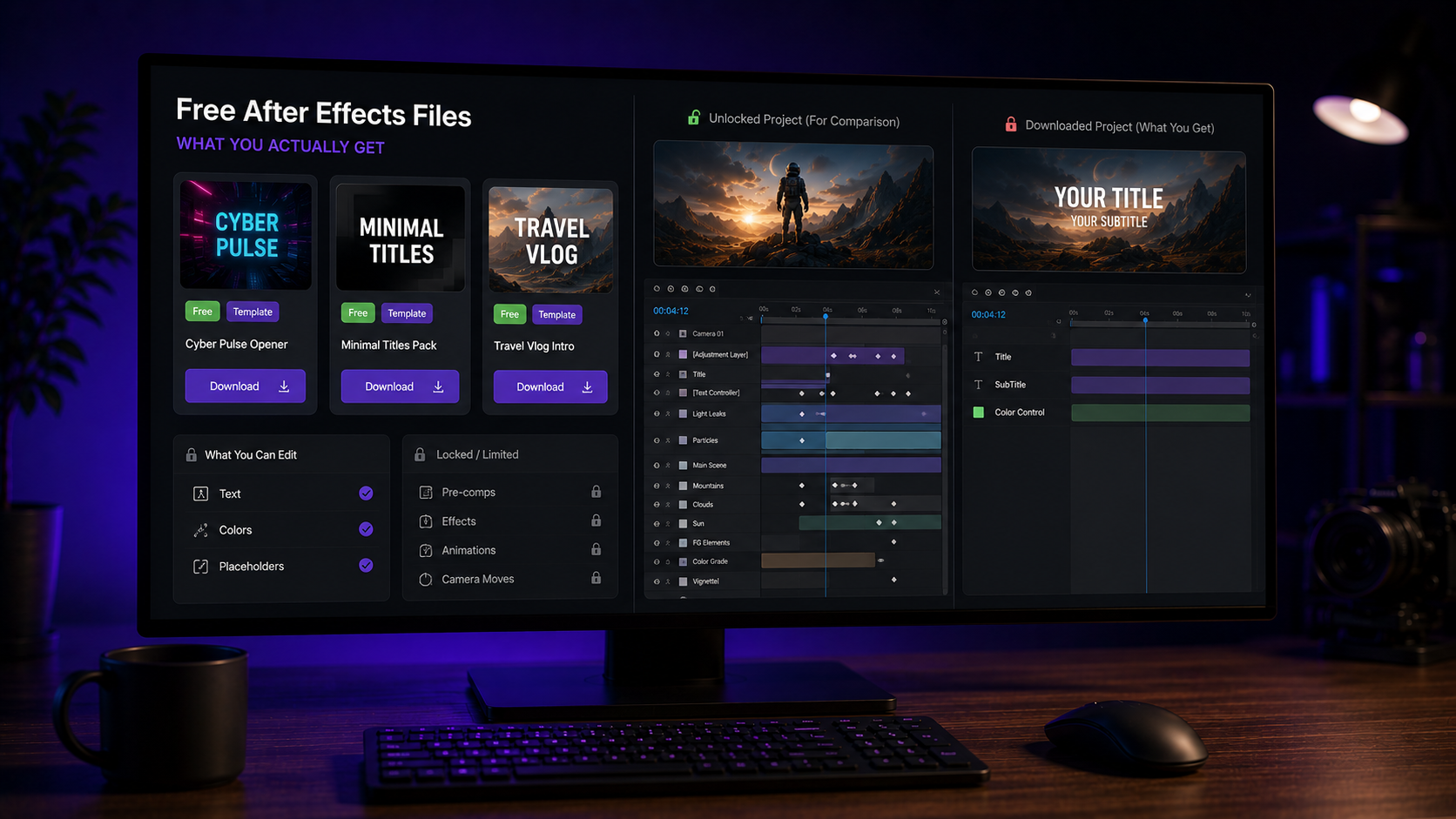
Free After Effects files are widely available from sources like Mixkit, Motion Array, and MotionElements, and most of them are locked templates rather than open project files. We build open files for a living, so we give the honest breakdown here rather than pretending free options do not exist. Free files work for real situations. They also carry gaps in organization, documentation, and licensing that matter most on client work. This guide names the genuine free sources, states plainly what free includes and excludes, and covers the licensing detail most roundups skip entirely.
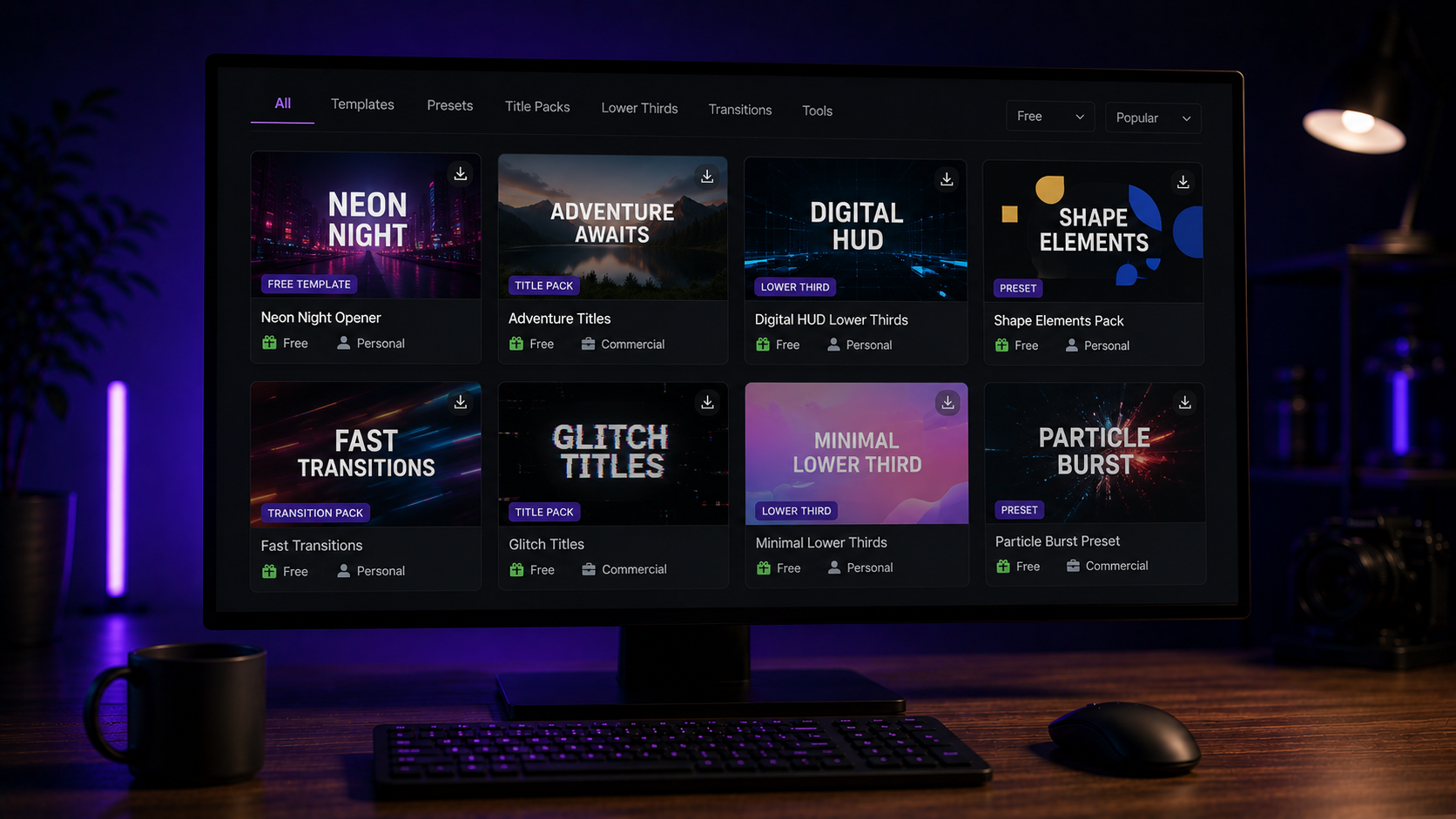
Several established sources offer genuinely free After Effects files with commercial-friendly licenses. These are the sources worth a look, each with its own terms.
Each source sets its own license terms, and the terms decide what a person may legally do with the file. Reading the specific license before client use is not optional, and the reason sits further down this page.
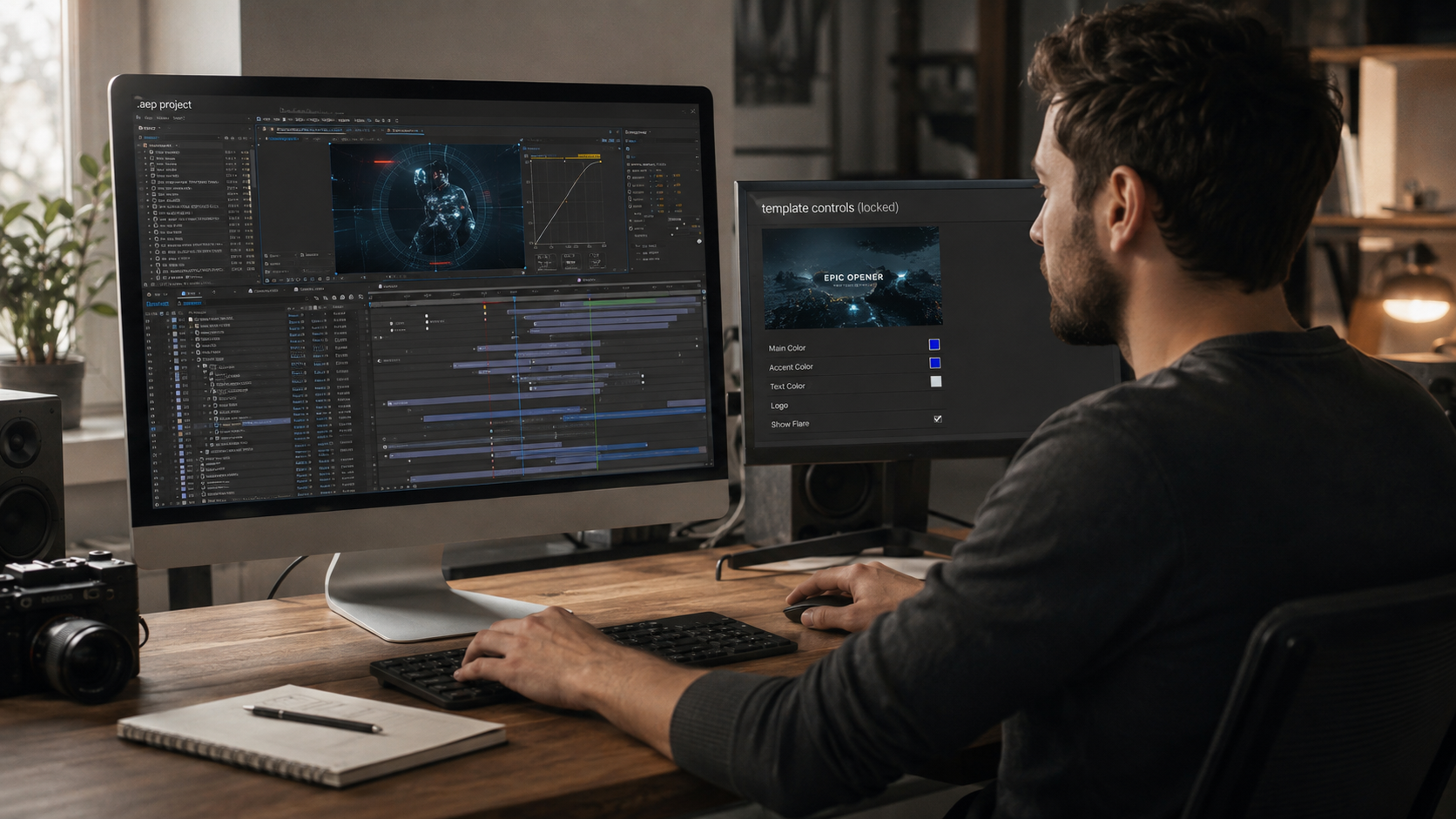
Most free downloads are locked templates with limited editable areas, not open project files with full timeline access. The distinction is the single most important thing to understand before downloading.
A locked template exposes a few placeholders: text fields, color swatches, maybe a media slot. The build stays sealed. An open project file exposes every layer, keyframe, and expression. Free sources overwhelmingly supply the first kind, because open professional files carry value the creators sell rather than give away. The full breakdown of the difference sits in our guide to After Effects project files versus templates.
Free After Effects files deliver a polished, pre-animated result ready for surface customization. The value is real for the right job.
Free files suit content creators on deadlines, editors testing a look, and anyone needing a quick graphic where the creative direction is fixed. For those jobs, free is the correct choice. Editors ready for open, customizable short-form files find them in our viral After Effects project files category.
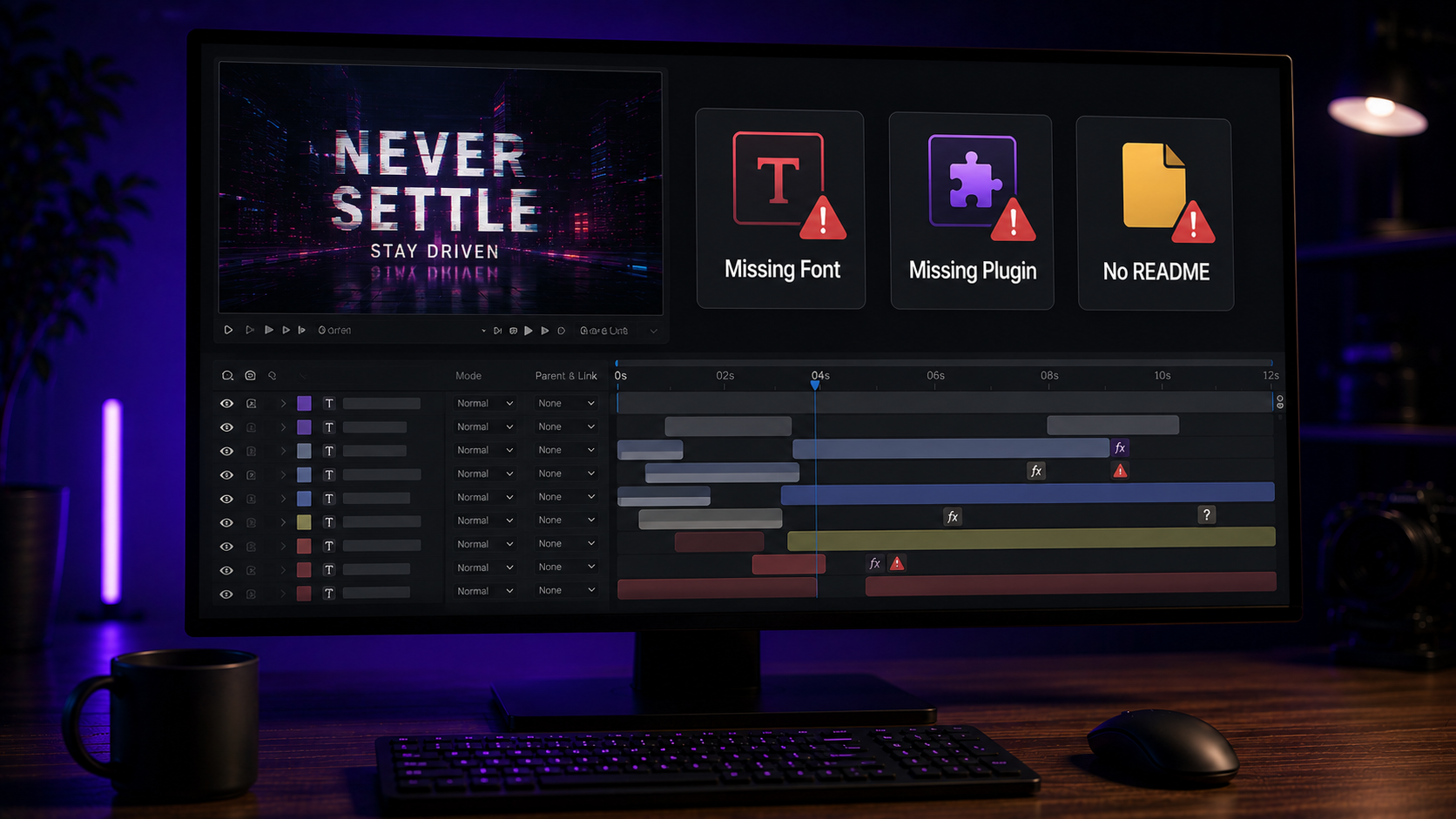
Free files commonly lack layer organization, documentation, plugin transparency, and clear commercial licensing. The gaps stay invisible until the moment they matter.
None of these gaps matter for a quick title card. All of them matter the moment the job needs real customization or client-grade reliability. The open standard that closes these gaps runs through our whole library of After Effects project files.
A free download is not automatically cleared for commercial client work, and the license terms decide the answer. This is the detail almost every free-file roundup skips, and it is the one that carries legal weight.
Free licenses vary widely. Some, like the Mixkit License, clear commercial use with no attribution. Others require attribution, restrict resale, or limit use to personal projects. A file used in a paid client deliverable under the wrong license exposes the editor, not the platform.
Three checks protect against the mistake:
The licensing gap is the strongest argument for a documented paid file on client work. Clear commercial rights remove the legal question entirely.
Free files win on quick, fixed-direction jobs, and organized paid files win on client work, learning, and customization. The honest decision comes down to the job.
| The situation | The better choice |
| Quick lower third or title card | Free template |
| Testing a look before committing | Free template |
| Client deliverable with revisions | Paid open file |
| Learning to build the technique | Paid open file |
| Reusable asset across projects | Paid open file |
Free costs more than its price when the job needs revisions the locked template cannot absorb, or when an unclear license creates risk on paid work. The selection standards for files that hold up sit in our guide to the best After Effects project files for beginners.
Mixkit, Motion Array, MotionElements, Videvo, and AEJuice offer free After Effects files. Each sets its own license, and Mixkit stands out for clearing commercial use with no attribution required.
Only when the specific license permits it. Some free licenses clear commercial work, and others restrict it to personal use or require attribution. Reading the license before client delivery is the responsibility of the editor.
Open professional files carry value the creators sell rather than give away. Free sources supply locked templates with limited editable areas, while open project files with full timeline access sit in paid libraries.
Rarely, and free files often lack documentation about what they need. A free file built on paid plugins throws errors with no readme explaining the requirement, which is a common free-download frustration.
Paid files earn their cost on client work, learning, and reuse through organization, documentation, and clear licensing. For a quick fixed-direction graphic, a free template is enough. The job decides the answer.

Explore more guides on After Effects project files and viral editing workflows.
Production-ready edits that teach you how they were built.