Back
Back

 Mar 01, 2026
 Muhammad Sikandar
An AE editing pack is a structured collection of After Effects project files, transitions, text animations, color controls, and pacing templates that standardizes motion language across every output. Five components determine whether a pack functions as a style system: motion language, typography, color, pacing, and layout. Editors who lock these five into a single pack produce a recognizable visual identity that audiences and algorithms reward through retention. The difference between an editing pack and scattered presets is structural repeatability: every video follows the same motion rules without rebuilding from scratch.
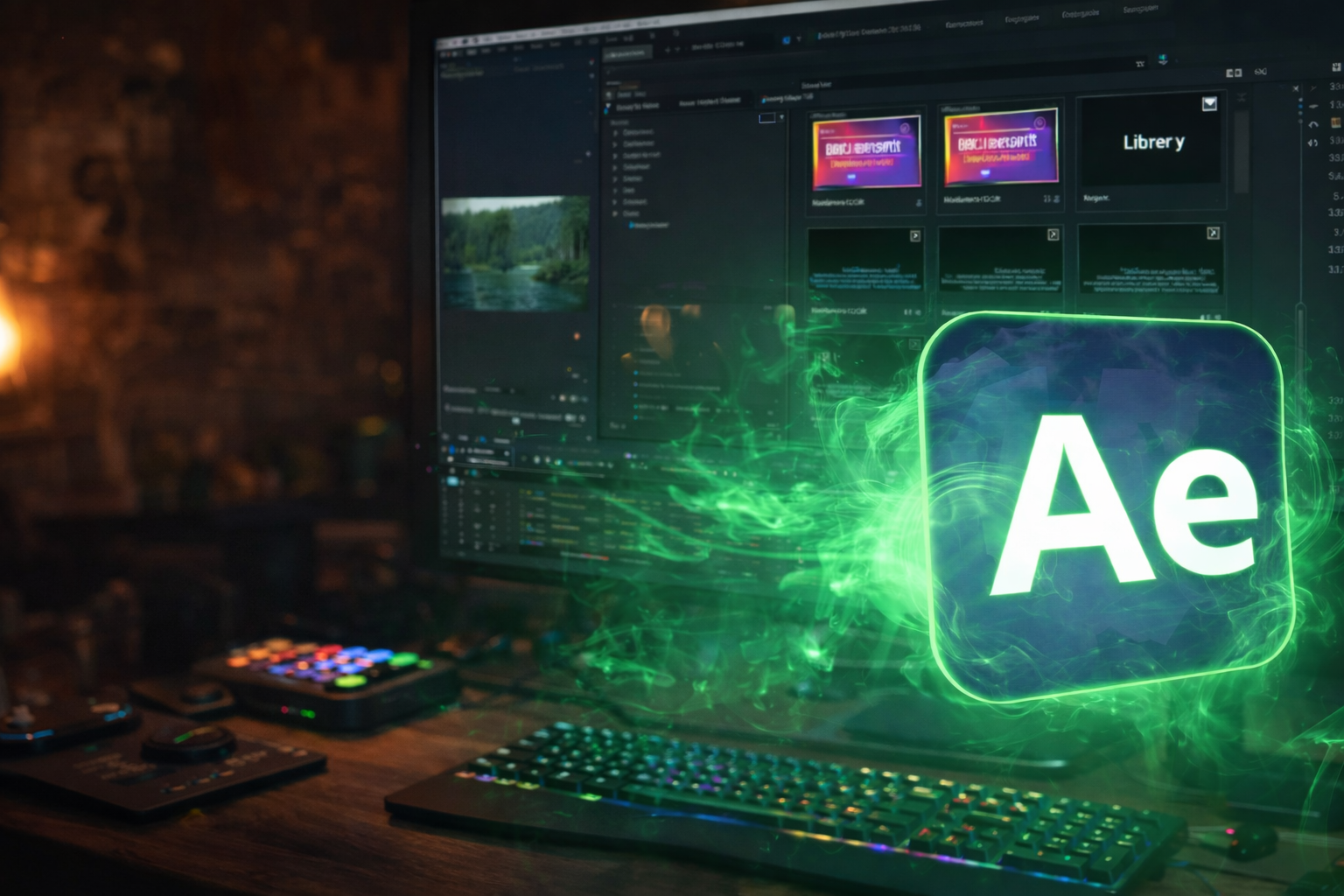
An AE editing pack is a structured collection of After Effects project files, transitions, text animations, color controls, and pacing templates built to function as a repeatable editing system, not a grab bag of random effects.
A pack at the commercial-production level typically includes:
A preset collection gives you effects. A structured editing pack gives you a motion identity that repeats across every video.
Five components determine whether an editing pack functions as a style system or stays a loose set of effects: motion language, typography, color, pacing, and layout.
The transition types, easing curves, and animation timing that an editor reuses across every project. A zoom-push with overshoot easing feels different from a hard cut with linear motion. Locking one motion behavior into a pack means every video carries the same kinetic signature. Audiences recognize motion patterns before they recognize logos.
One to two font families, a defined text animation style (snap-on, slide-up, or fade-in), and consistent placement rules for lower-third position, hook-text size, and end-card layout. When fonts and text motion change per video, the visual identity fractures instantly because text occupies foreground attention on every frame it appears in.
A locked color grade applied through adjustment layers or a global color controller. LUTs, tint overlays, and contrast curves that stay constant across outputs. Color is the fastest visual recognition signal: viewers identify a creator’s footage by its tone before reading any text.
Beat markers, hook timing (first 0.5 to 1 second), cut rhythm (shot duration patterns), and structural flow following a hook, build, punch, and close sequence. Pacing is the least discussed but most felt component of editing consistency. It determines whether a viewer’s scroll stops or continues.
9:16 vertical composition with platform-safe text zones, hook-first framing that places the strongest visual in frame one, and consistent margin rules for text placement. Layout standardization ensures nothing gets cropped by platform UI elements across Reels, TikTok, and Shorts.
When all five components lock into a single pack, the editor produces a visual fingerprint. That fingerprint is what short-form algorithms reward: viewers stay longer on content that feels familiar, and retention drives distribution.
A structured editing pack becomes a style system through three workflow steps: lock the identity, repeat the structure, and customize within the framework.
Open the pack and choose the elements that define your output. Select one transition style, one text animation approach, one color grade, and one pacing structure. Do not use every preset available. The power of a pack is constrained, not volume. Commit to those selections for a minimum of 10 to 15 videos before adjusting.
Apply the same blueprint to every video: hook (0 to 1 second), build (2 to 8 seconds), punch (9 to 12 seconds), close (13 to 15 seconds). A structured editing pack makes this sequence repeatable without rebuilding the timeline each session. Import the template composition, replace footage, adjust text, and render.
Swap footage. Adjust timing to match new audio. Change text content. Shift the color grade slightly for seasonal variation. The motion language, typography rules, pacing structure, and layout stay constant. The content inside those containers changes per video. That balance between structural consistency and creative flexibility is what separates a system from a cage.
Every EarnEdits AEP contains locked motion language, organized compositions, defined color controls, and 9:16 framing ready for Reels and Shorts.
Browse Editing Packs
Five structural signals separate a production-grade editing pack from a preset dump: folder organization, timing editability, typography definition, color control architecture, and platform-ready output.
If a pack lacks two or more of these signals, it is a preset collection, not a style system. For a deeper breakdown of structural quality indicators, see what makes a powerful editing pack.
The choice between an editing pack and building from scratch is not creative freedom vs. limitation. It is speed and consistency vs. experimental control.
Most working editors use both approaches. Packs cover the 80% of output that requires consistency and speed. Scratch builds cover the 20% that requires exploration. The editing pack does not replace creative judgment. It removes repetitive structural decisions so the editor can focus on content and storytelling.
Five behaviors destroy the visual consistency that an editing pack is built to create.
Each of these behaviors returns the editor to the starting position: inconsistent output that looks different every time.
EarnEdits AEPs are built as editing packs with locked motion language, organized compositions, and zero plugin dependencies. Open, replace, render.
Explore Editing Packs
An editing pack is worth buying if you produce short-form content on a recurring schedule and need a consistent visual identity across outputs. Editors producing weekly Reels or Shorts gain more from a pack than editors creating one video per month, because style recognition compounds over time.
Only if you use every preset at default settings without customization. A well-structured pack is a framework, not a finished product. The motion language, color grade, and typography define the boundaries. The footage, timing, and storytelling inside those boundaries are entirely yours.
A preset collection is a set of individual effects (transitions, LUTs, text animations) without a structural connection between them. An editing pack organizes those same elements into a system: shared motion language, consistent typography, unified color, defined pacing, and platform-ready layout. The pack creates identity. The collection creates options.
Working editors who produce volume (agency editors, freelancers with recurring clients, channel editors posting three to five times per week) use packs to standardize output and cut per-project setup time. The pack eliminates repetitive structural decisions so the editor concentrates on content.
Swap footage and audio. Adjust text content. Shift timing to match new audio cues. Keep the motion language, font pairings, color grade, and layout structure intact. The content inside the pack changes per video. The system around it does not.

Explore more guides on After Effects project files and viral editing workflows.
Production-ready edits that teach you how they were built.