Back
Back

 Feb 26, 2026
 Muhammad Sikandar
After Effects project files (.aep) store every layer, keyframe, effect, and media reference inside a single editable document that any editor can open and rebuild. Real .aep files expose the full editorial decision chain, unlike templates that hide structure behind placeholder-replacement workflows. Editors who deconstruct actual project files build keyframe intuition faster than those watching passive tutorials, because .aep files teach through doing. Viral edit project files go further, replicating exact timing patterns, velocity curves, and motion sequences that drive engagement on reels, shorts, and TikTok.
EarnEdits builds every .aep file around this principle: viral-ready project files with full-layer transparency, so editors can use the file today, learn from it permanently, and never run out of proven editing ideas.
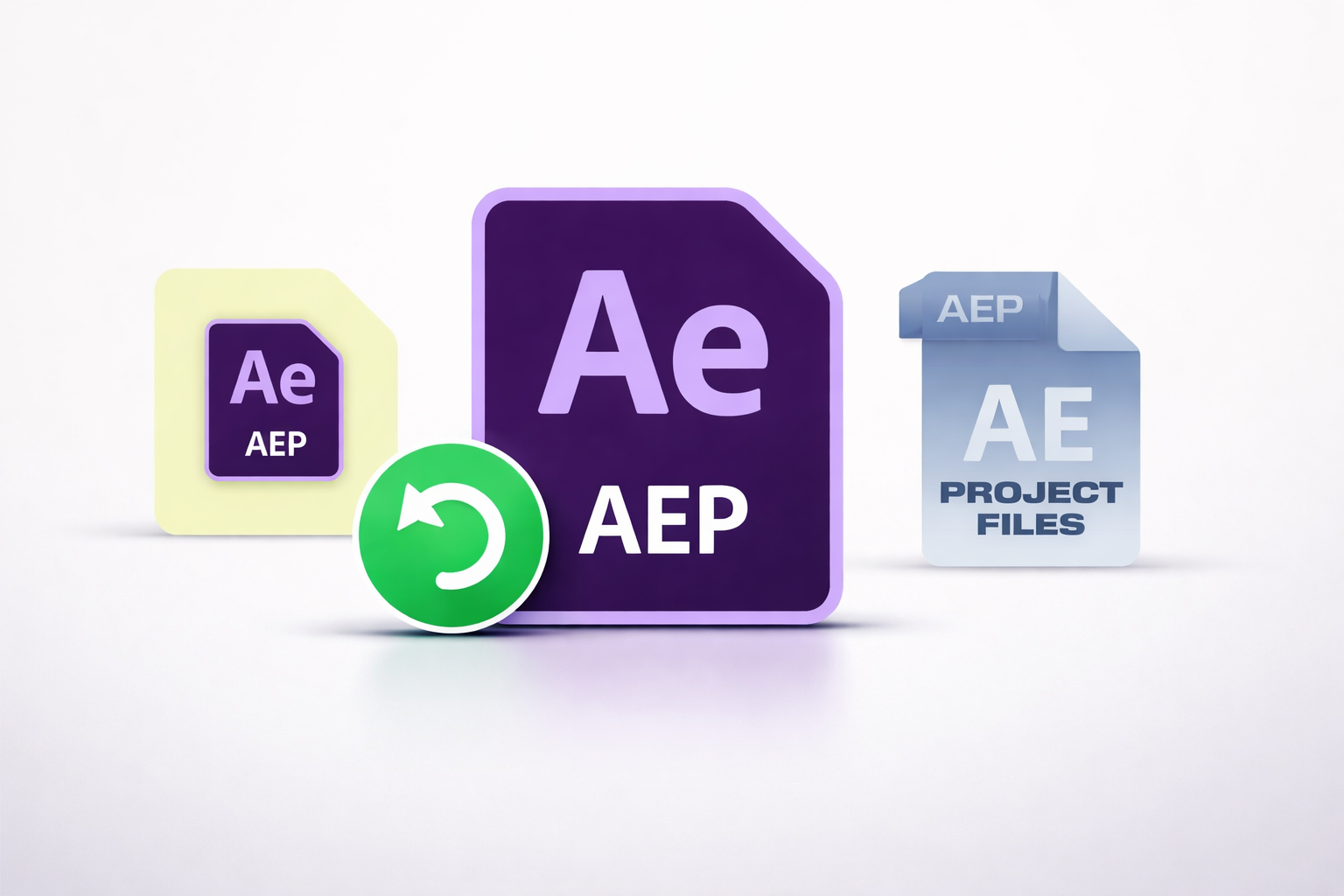
An After Effects project file (.aep) is a binary document that stores your entire composition structure. Every layer, keyframe, effect parameter, expression, and media reference lives in a single file.
Open any .aep file, and you see the full architecture: compositions nested inside compositions, footage items linked through the Project Panel, adjustment layers stacked in a specific order, and keyframe data mapped across the graph editor.
Three file types matter:
The .aep format is what working editors share, study, and build from. When you open someone else’s .aep, you see every decision they made, layer order, effect stacking, timing, and expression logic. Nothing hidden. A rendered video shows the result. A .aep shows the process. EarnEdits project files take this further with organized folders, labeled layers, and color control panels, so every editorial decision is clear from the moment you open the file.
Templates (.aet and .mogrt files) and project files (.aep) solve different problems.
A template provides a fixed structure with placeholder fields. Replace the text, insert footage, and export. Fast production, zero visibility into how the effect was built. You customize the surface without touching the engine.
A real project file opens everything. Every layer unlocked. Every keyframe is editable. Every effect parameter is visible. You see why the editor chose a specific ease curve, how they stacked effects, and where they placed null objects for 3D camera movement.
For editors who want to produce fast and move on, templates work. For editors who want to produce faster and get better at the same time, real .aep project files are the tool, and that distinction is exactly why EarnEdits sells open project files, not locked templates.
Most marketplaces label everything “templates” regardless of format. An editor searching for project files often ends up with locked .mogrt files that teach nothing about the actual workflow. EarnEdits labels clearly: every file is a full .aep with complete layer access.
For the full breakdown, read After Effects project files vs templates and what editors should know.
Editors who open and deconstruct real .aep project files build workflow understanding faster than passive video tutorials, because they teach through interaction rather than observation.
When you open a real .aep, you solo layers to isolate effects. You scrub the timeline to see keyframe spacing. You adjust parameters and watch what changes. This is project-based learning, the most effective method for mastering motion design.
Google’s AI Overview for “learn After Effects from real projects” specifically recommends using project files to reverse-engineer compositions, keyframes, and effects. The reasoning is straightforward: tutorials explain what happened. Project files let you experience how it happened inside your own After Effects workspace.
EarnEdits project files are structured specifically for this kind of learning. Each .aep uses naming conventions (“MAIN_COMP,” “TEXT_EDIT,” “COLOR_CONTROL”) so editors can navigate the project logically rather than digging through unnamed layers. The gap between watching a tutorial and opening an EarnEdits file is the gap between reading about swimming and getting in the water.
Editors who want structured learning through real files should explore why real After Effects project files teach more than online courses. Those starting out can check the best After Effects project files for beginners in 2026.

Viral edit project files replicate the exact timing patterns, velocity curves, and motion design sequences that drive social media engagement, built as 20-32 second vertical compositions (1080×1920) with beat-synced keyframes, not generic placeholder animations.
Standard templates are designed for corporate use: logo reveals, slideshow intros, and 30-60-second title sequences in horizontal format. None of that performs on reels, shorts, or TikTok, where audience retention depends on velocity and rhythm within the first 3 seconds.
Viral edit project files are targeted at social media editors. They’re built around techniques that perform: velocity/time remapping synced to audio beats, 3D camera movement through null objects, text animation with scale and opacity keyframes, motion blur stacking through plugins like RSMB or Twixtor.
When you open an EarnEdits viral-style .aep, you see beat-synced keyframe placement in the graph editor, how the editor achieved specific velocity ramps, and where Deep Glow or Sapphire effects create the signature look social audiences respond to. Each of the 30 EarnEdits project files is a real edit built around proven viral styles, not a generic animation repurposed for social.
No template marketplace curates specifically for this. Most sell thousands of generic options. EarnEdits builds each project file around editing styles that already drove engagement.
For deeper application, read how viral edit styles are built inside After Effects and viral After Effects project files for reels, shorts, and TikTok.
Using an After Effects project file follows a consistent six-step process from open to export.
Step 1: Open the .aep file in your version of After Effects. Newer AE opens older project files. Older AE cannot open newer files; always check version compatibility before downloading.
Step 2: Review the Project Panel. Look for labeled compositions, footage folders, and asset organization. EarnEdits files use clear naming conventions: “MAIN_COMP,” “TEXT_EDIT,” “COLOR_CONTROL”, so you navigate immediately without guessing.
Step 3: Check for missing fonts and plugins. AE flags missing items on open. Common plugins include RSMB, Twixtor, and Deep Glow. Many EarnEdits project files use native AE effects, reducing plugin dependencies.
Step 4: Replace footage in placeholder compositions. Keep original keyframe timing and effects intact. Swap your clips into clearly marked layers.
Step 5: Adjust text, color controls, and timing to match your edit. EarnEdits files include dedicated color control panels so you can change the entire look without touching individual layers. Export through Adobe Media Encoder for optimized format and file size.
Step 6: Use File > Dependencies > Collect Files before archiving or sharing. This bundles the .aep file and all linked assets into a single folder.
The full process, open, explore, replace, adjust, export, takes under 15 minutes with a properly organized EarnEdits file. For file safety guidelines, read how to download After Effects project files safely.
EarnEdits offers 30 viral-style project files built by working editors. Each .aep includes organized layers, editable text and color panels, sound recommendations, and full keyframe transparency. Individual files range from $2.99 to $6.99. Monthly subscription is $17/month. Yearly access costs $150/year. Every file works as both a production tool and a learning resource. For editors producing reels, shorts, and TikTok content, this is the most focused library available.
Beyond EarnEdits, project files come from three other source categories:
Free libraries: Mixkit offers free project files with no signup. Video Copilot shares tutorial-companion files. YouTube creators drop .aep files in video descriptions. Quality varies; most are basic compositions without the layer organization or viral-style focus EarnEdits provides.
Subscription marketplaces: Envato Elements and Motion Array offer thousands of templates and project files under monthly plans. Massive libraries, minimal curation for viral or social media editing styles.
Individual purchase platforms: VideoHive sells single project files ranging from $10 to $50+. Fits one-off production needs but lacks the curated viral editing focus.
The right source depends on your goal. For one-off, generic deliverables, large marketplaces work well. For editors looking to consistently build skills while producing viral-style content, EarnEdits is built specifically for that workflow.
For comparisons, read where to buy After Effects project files in 2026 and why a weekly updated After Effects library keeps editors sharp.
Opening files in an older AE version than the one used to create them. Always check version compatibility before downloading.
Ignoring Collect Files before sharing or moving projects. Broken media links mean rebuilding from scratch.
Downloading .aep files from unverified sources without checking for malware. Stick to established platforms like EarnEdits, Mixkit, and Envato.
Treating every project file as a template and replacing placeholders without studying the layer structure defeats the learning purpose. EarnEdits files are designed for study, not just customization.
Skipping the graph editor. Viral edit timing is determined by velocity curves and ease values, not by keyframe positions alone.
Full list with fixes covered in common mistakes when using After Effects project files.
After Effects project files (.aep) are the most direct way to study real editing workflows, build keyframe skills, and produce content faster. Templates fill production slots. Project files fill production slots and build your abilities simultaneously.
For reels, shorts, and TikTok editors: EarnEdits viral-style .aep files built around proven engagement patterns eliminate hours of trial and error. Every file is a real edit, fully transparent, organized for learning and production.
Open the .aep. See how the edit was built. Re-edit with your footage. Finish faster. Get better.
Browse the full library at EarnEdits. To understand the foundation, start with why editable .aep files matter more than locked templates.
No. Premiere Pro opens .mogrt files through the Essential Graphics panel. To work with .aep files, After Effects must be installed. Dynamic Link connects both applications for cross-editing.
From established sources like Mixkit, Video Copilot, and verified creators, yes. Avoid random file-sharing sites. EarnEdits files are verified and organized for safe, immediate use. Specific safety guidelines are covered in how to download After Effects project files safely.
Depends on licensing. EarnEdits files include commercial use rights. For other platforms, always verify specific license terms before delivery. For practical guidance, read using After Effects project files for client work.
A .aep is a full After Effects project with every layer editable. A .mogrt is a Motion Graphics Template packaged for Premiere Pro with limited customization. Editors wanting to learn workflow and build real skills need .aep files, the format EarnEdits delivers exclusively.
No. Project files store references to media, not the media itself. EarnEdits files use labeled placeholder compositions to make footage replacement easy.
Certain effects (RSMB for motion blur, Deep Glow for glow effects, Twixtor for time remapping) extend native AE capabilities. EarnEdits lists plugin requirements for each file so you can check compatibility before downloading.

Explore more guides on After Effects project files and viral editing workflows.
Production-ready edits that teach you how they were built.