Back
  • Insights
  • Viral After Effects Project Files for Social Media

Viral After Effects Project Files for Social Media

  • Tools & Resources
  • Feb 26, 2026
  • Muhammad Sikandar
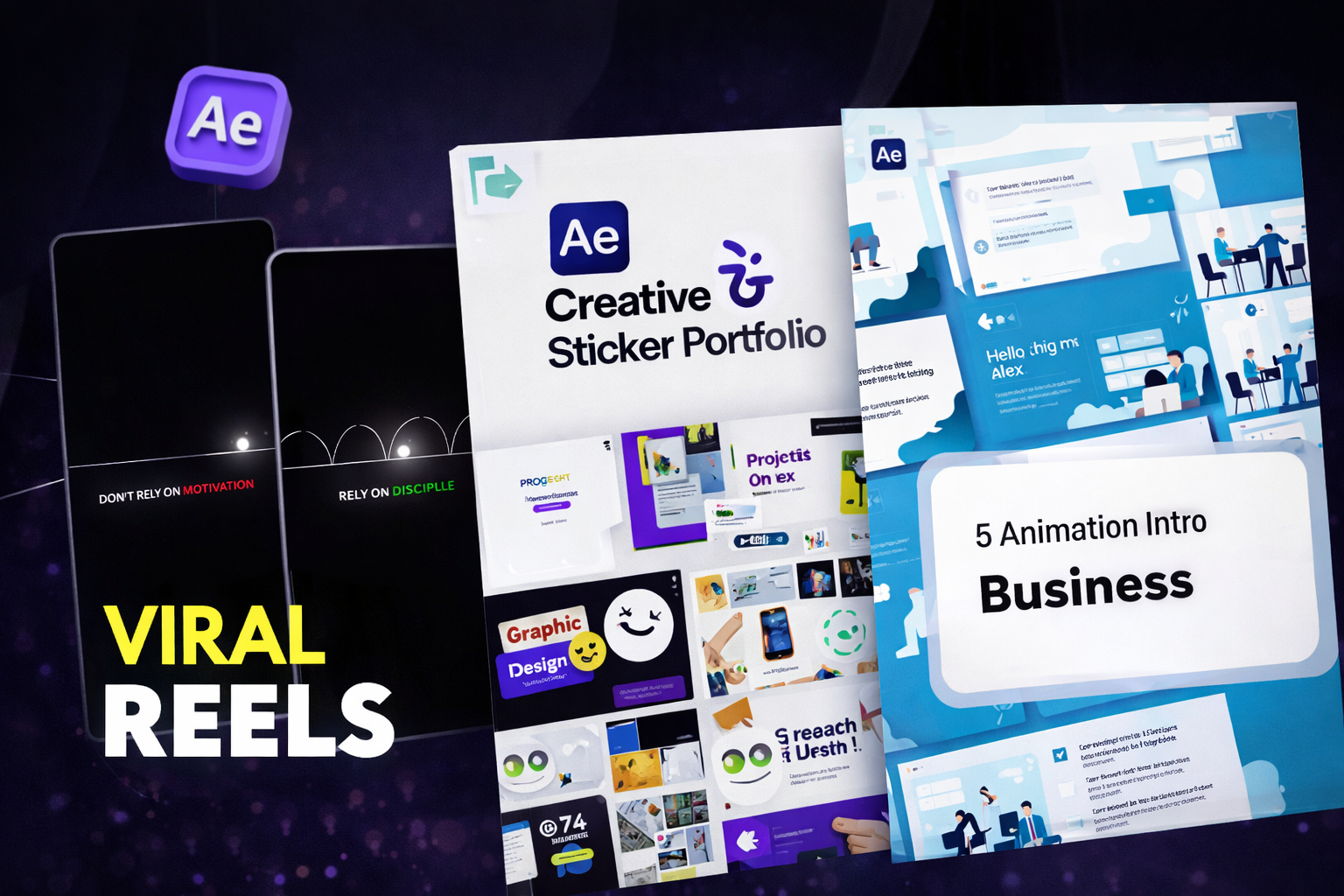
Viral After Effects Project

Viral social media edits, reels, TikTok, YouTube Shorts, follow specific technical patterns inside After Effects that drive watch time, retention, and shares. The first 1.5 seconds hook viewers through motion. Beat-synced cuts maintain rhythm. Velocity remapping controls energy. 3D camera movement adds depth to flat footage. These techniques live inside .aep project files are keyframe structures, effect stacks, and composition hierarchies that any editor can study, customize, and export for their own content.


EarnEdits builds project files around these exact viral patterns, 30 production-ready .aep files with fully exposed keyframe structures, organized layers, and editable compositions designed for social media editors who need both speed and technique understanding. Every file targets the 20-32-second vertical format that performs across Reels, TikTok, and Shorts.
Why Social Media Edits Require After Effects Project Files

Social media platforms reward specific motion patterns. Instagram’s algorithm favors reels with high completion rates. TikTok promotes content with early engagement spikes. YouTube Shorts prioritizes watch-through percentage. Every platform penalizes static content and rewards dynamic visual motion.


After Effects is where those motion patterns get built. Text animations that scale and fade on beat. Footage transitions timed to audio waveforms. Camera movements that create parallax depth from flat images. Glow, chromatic aberration, and motion blur effects that give edits the polished look viewers associate with professional content.


The problem: building these techniques from scratch takes 3-6 hours per edit. Recreating a tutorial step by step takes 1-3 hours. Opening an EarnEdits project file, studying the keyframe structure, replacing footage, re-timing to your audio, and exporting takes 30-45 minutes.


For editors producing 3-5 social media edits per week, the difference between building from scratch and working from EarnEdits .aep files are 10-20 hours saved weekly, while still learning the techniques behind every edit you deliver.


For the full technical breakdown of how viral edit styles map to keyframe patterns, read viral edit styles using After Effects project files.

Composition Settings for Social Media Formats

Viral After Effects Project

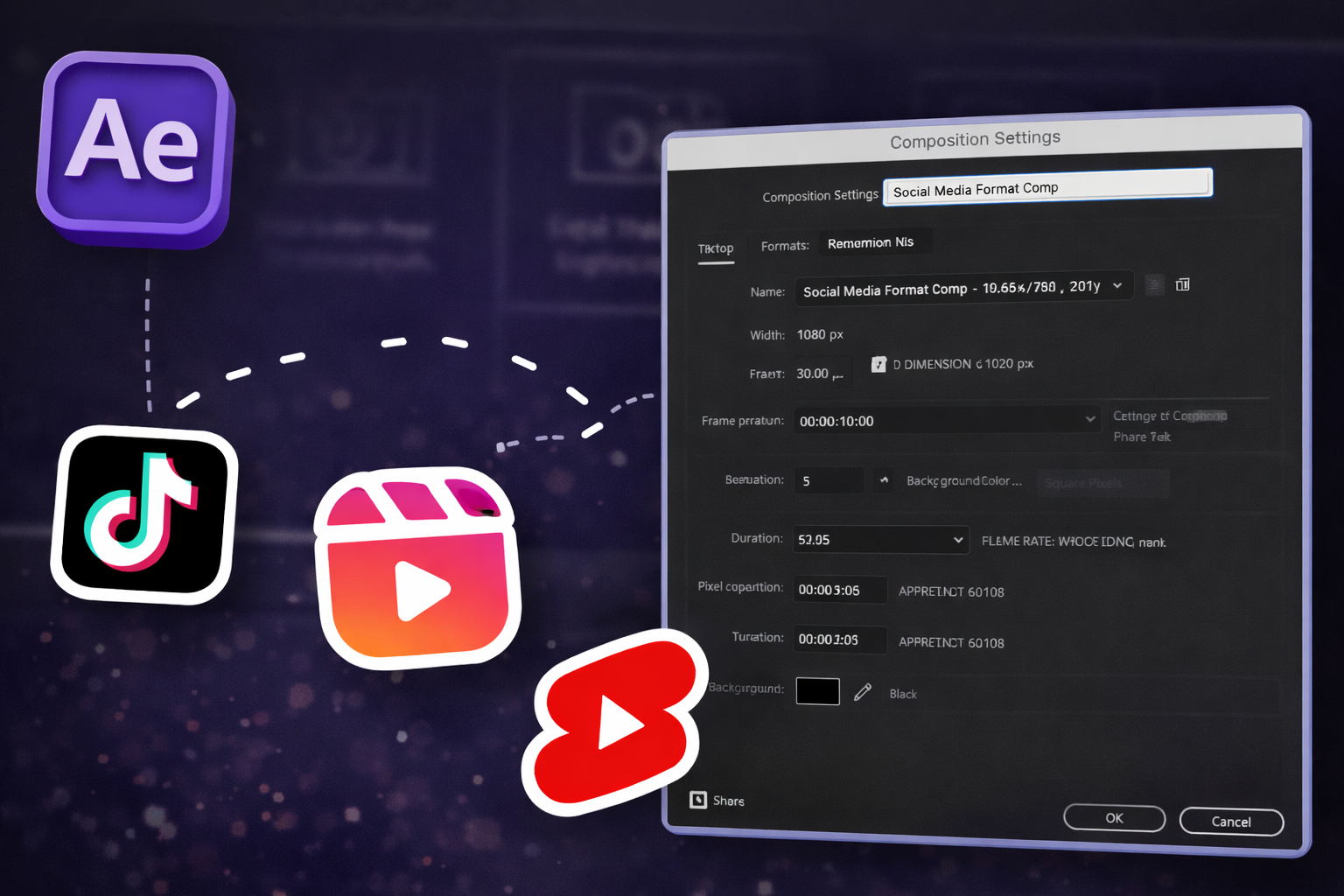
Every social media project file starts with the correct composition settings. Incorrect settings can cause awkward cropping, quality loss, or platform rejection. EarnEdits files ship with these settings pre-configured for vertical social media, no setup required.


Vertical video (reels, TikTok, Shorts): 1080×1920 pixels, 9:16 aspect ratio. Frame rate: 30 fps for standard content; 60 fps for high-motion edits that require smooth slow-motion. Duration: 15-60 seconds for reels, up to 3 minutes for TikTok. Most viral edits perform best between 20-32 seconds, the exact duration range EarnEdits builds every file around.


Square format (Instagram feed, Facebook): 1080×1080 pixels, 1:1 aspect ratio. Used less frequently for motion content but still relevant for carousel-adjacent video posts.


Horizontal short-form (YouTube Shorts from landscape source): 1920×1080 cropped or reframed to 1080×1920 using position keyframes or Auto-Reframe. Shorts uploaded in 16:9 display with black bars on mobile, always reframe to 9:16.


Safe zones matter. Platform UI elements overlay the top and bottom of vertical video. Keep critical text and visual elements centered within 80% of the frame. Caption placement, CTA text, and key motion elements that extend into the top 10% or bottom 10% are hidden behind profile names, such as buttons and description text. EarnEdits files position all text and key elements within safe zones by default.


Export settings for maximum quality: H.264 codec, VBR 1-pass, target bitrate 15-20 Mbps for 1080×1920. Higher bitrate preserves detail through platform recompression. Instagram and TikTok both re-encode uploads, starting with a higher source quality produces cleaner final playback.
Explore Our Collection Of After Effects Projects

A curated selection of our top-performing viral edit projects - crafted to capture attention instantly and convert viewers from the very first scroll.

The Four Viral Edit Styles Dominating Social Platforms

Each viral edit style maps to specific After Effects techniques and project file structures. EarnEdits covers all four categories, each .aep file built around the keyframe patterns that define the style.


High-energy phonk/velocity edits. Characterized by extreme time remapping, aggressive camera movement, motion blur, and bass-synced cuts. The keyframe signature: Time Remap with sharp ease-in/ease-out curves creating sudden speed changes. 3D camera on null objects with position and rotation keyframes synced to audio peaks. RSMB or native motion blur applied at high shutter angles. These edits dominate fitness, automotive, and lifestyle content. EarnEdits phonk-style files expose every velocity curve in the graph editor, so you see exactly how the speed changes create the feel.


Minimalist motion graphics. Clean text animations, geometric shapes, smooth transitions, muted color palettes. The keyframe signature: Scale and opacity animations with gentle easing (75-85% influence in the graph editor). Shape layer animations using trim paths for line reveals. Solid color backgrounds with subtle gradient shifts. These edits perform on business, education, and tech content. EarnEdits minimalist files show the precise easing values that make smooth motion look effortless.


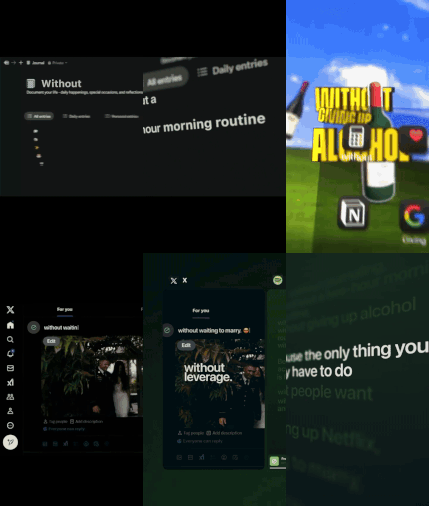
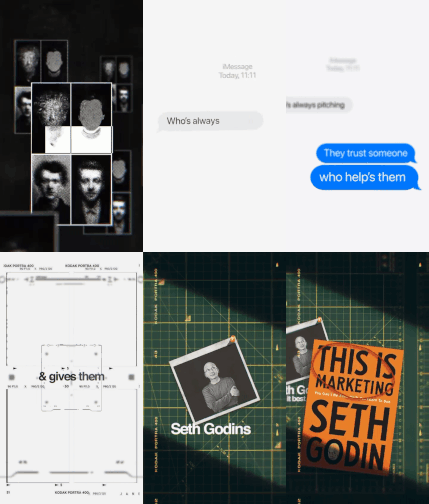
Caption-driven story edits. Text appears word by word or phrase by phrase, synced to the voiceover. Subtle background footage with heavy text overlay. The keyframe signature: Per-word text animators with scale/opacity/position offsets timed to audio waveform markers. Background footage with low opacity or blur to keep text readable. Sound effect layers at each text reveal. These edits dominate commentary, storytime, and educational content.


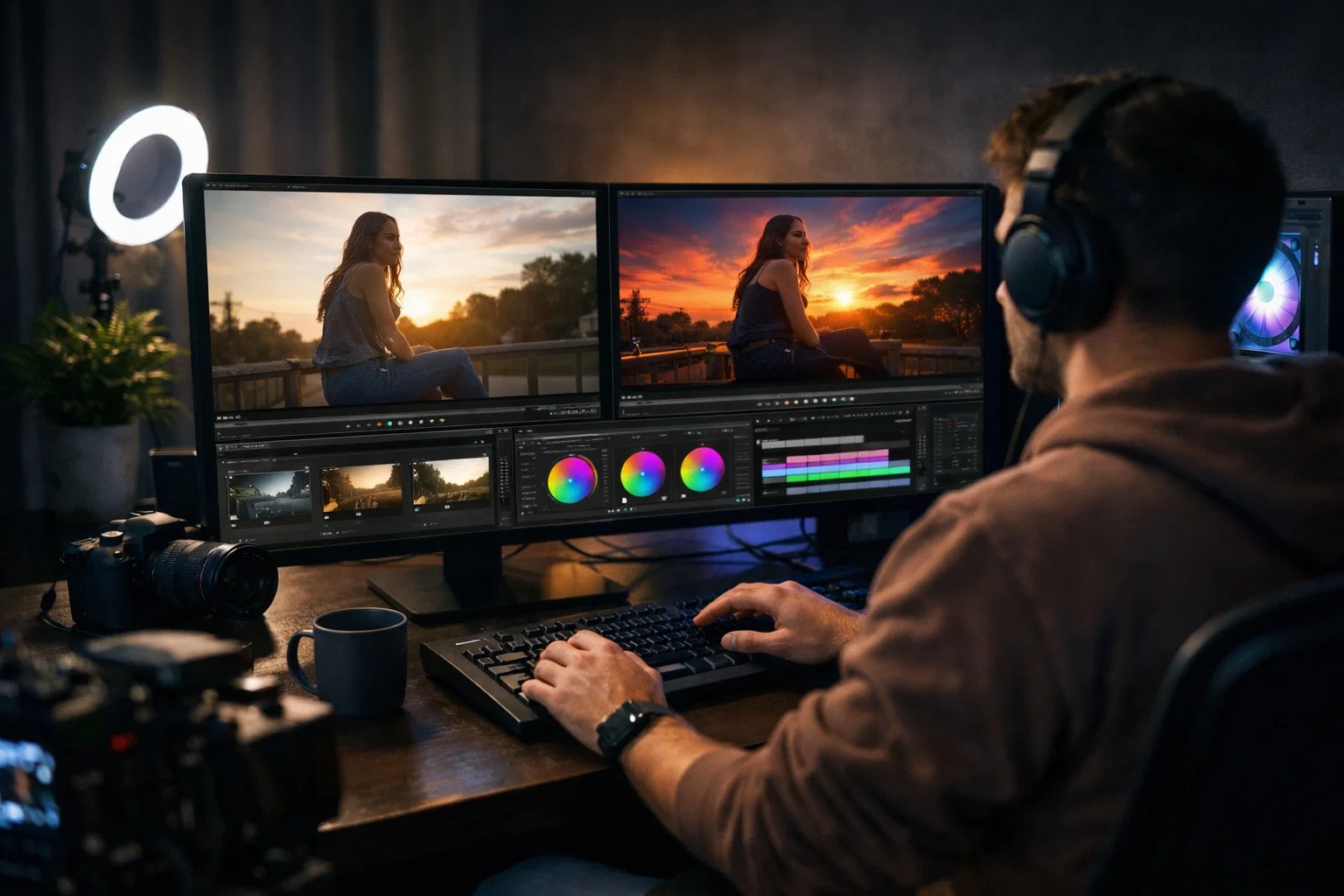
Cinematic short-form. Film grain overlays, letterbox bars, camera shake, and color grading that mimics film stock. The keyframe signature: Adjustment layers with Lumetri-style grading (lifted blacks, compressed highlights). Wiggle expressions on the position for a subtle handheld feel. Warp Stabilizer combined with intentional camera drift. These edits work for travel, food, fashion, and narrative content.


Open any EarnEdits file in the graph editor, study the velocity curves, understand how the timing creates the feel, then replace footage and re-time to your own audio. Every file is a real edit with the full technique stack visible, not a template hiding the logic behind controller layers.

How to Customize a Viral Project File for Your Content

Downloading a project file and exporting it unchanged produces generic content that audiences recognize as template work. Customization is what separates editors who use EarnEdits files effectively from editors who produce cookie-cutter output.


Step 1: Replace all placeholder footage. EarnEdits files clearly mark footage layers, and drop your clips into the designated footage compositions. Match the original clip duration or adjust keyframes to fit your footage length. Mismatched durations create awkward holds or premature cuts.


Step 2: Re-time your audio. The original EarnEdits file was timed to a specific track. Your audio has different beat patterns. Set the audio waveform display to visible in the timeline. Move cut points and transition keyframes to align with your track’s beats and drops. This step alone makes the edit feel custom rather than templated.


Step 3: Adjust the color grade. EarnEdits files include dedicated color control panels that let you modify the global color scheme across compositions without affecting individual layers. Adjust Curves, Color Balance, and any grading effects to serve your specific footage.


Step 4: Modify text and graphics. Change headline text, font weights, and animation timing using EarnEdits’ labeled “TEXT_EDIT” compositions. If the original uses a scale-up reveal but your content needs a wipe-in, adjust the keyframe type. Don’t leave default placeholder text; audiences notice it immediately.


Step 5: Layer your own sound effects. EarnEdits files include sound recommendations, but layer your own whooshes, impacts, and subtle texture sounds synced to visual keyframes at transition points, text reveals, and camera movements. Sound design accounts for 40-50% of perceived production quality in viral edits.


Step 6: Verify safe zones and export. Check that no critical elements sit in the top or bottom 10% of the frame. Export at 15-20 Mbps target bitrate for platforms that recompress uploads.

Where to Find Viral-Style After Effects Project Files

Viral After Effects Project

Sources range from free community resources to curated production libraries. Each serves a different editorial need.


EarnEdits, a curated library of 30 viral-style .aep project files built specifically for social media editors. Each file covers a 20-32 second edit with organized layers, labeled compositions, and fully exposed keyframe structures. The Emotion Beats Algorithm file is a strong example of how beat-synced keyframe logic is structured inside a production-ready .aep. Files designed for both production use and technique learning. Individual files $2.99-$6.99, monthly subscription $17/month, yearly $150/year. Browse the full library at earnedits.com.


YouTube tutorial companions. Creators like Vane Motion, SonduckFilm, and Tarik publish After Effects tutorials with downloadable project files. Quality varies; some are clean and labeled, others are raw working files with unnamed layers. Free, but requires time to deconstruct and adapt, compared to EarnEdits’ consistently organized files.


Mixkit. 22 free After Effects templates optimized for Instagram Stories. Suitable for basic social media motion graphics. Template format with placeholder customization, limited learning value, but functional for quick output when you don’t need the depth EarnEdits provides.


VideoHive and Motion Array. Subscription and individual-purchase libraries with 1,000+ social media templates. Production-focused with controller layers and placeholder systems. Efficient for deadline-driven work, limited for editors who want to understand how effects were built.


Patreon and Gumroad creators. Individual motion designers share project files behind paywalls, often bundled with tutorial explanations. Quality and organization depend entirely on the creator.


For editors evaluating which source fits their workflow, the key question is whether you need placeholder-swap speed or full keyframe access. Templates from marketplace libraries prioritize first. Curated .aep files from EarnEdits prioritize both.Once you’re producing consistently for social media, read how editors use After Effects project files for client work to take these same techniques into a professional delivery workflow.

Common Mistakes With Social Media Project Files

Exporting without re-timing to your audio. The most visible sign of template use. If cuts and transitions don’t align with your track’s beats, the edit feels disconnected, regardless of visual quality. EarnEdits files ship with beat-mapped keyframes. When you swap audio, these positions show you exactly where new sync points should land.


Ignoring platform safe zones. Text and key visual elements placed in the bottom 15% of a vertical video are obscured by the platform UI. Preview your edit inside the Instagram or TikTok app interface before final export. EarnEdits files position elements within safe zones by default.


Over-stacking effects without checking render time. Applying glow, blur, particles, and motion blur simultaneously can push per-frame render times over 30 seconds. For a 30-second edit at 30fps, that’s 7.5+ hours of render time. Disable effects that aren’t visible in the final output.


Using plugins that the project file requires but you don’t own. Deep Glow, RSMB, Twixtor, Sapphire: if the project file uses third-party plugins you haven’t installed, those effects render as red “Missing” errors. EarnEdits lists plugin requirements for each file and builds many projects on native After Effects effects to minimize dependency issues.


Exporting at a low bitrate. Social platforms recompress every upload. Starting with a low-bitrate source file means double compression, visible artifacts, banding in gradients, and soft text. Export at 15-20 Mbps minimum for 1080×1920 vertical video.

Explore Our Collection Of After Effects Projects

A curated selection of our top-performing viral edit projects - crafted to capture attention instantly and convert viewers from the very first scroll.

Key Takeaways

Viral social media edits follow specific After Effects patterns, velocity remapping, beat-synced keyframes, 3D camera movement, and effect stacking that live inside .aep project files are editable, learnable structures. Editors who work fromthe EthearnEdits project files with exposed keyframe access produce faster than editors building from scratch and learn more than editors locked into placeholder-only templates.


EarnEdits builds project files specifically for social media editors who need both production speed and technique transparency, 30 viral-style .aep files, each organized for learning, each ready for production.


Browse the full library at EarnEdits, or return to the complete guide to After Effects project files for the full foundation.

Frequently Asked Questions

What frame rate should I use for viral social media edits?

30fps for standard edits. If your edit includes velocity remapping that creates slow-motion segments, a higher source frame rate produces smoother slow-motion without frame-interpolation artifacts. EarnEdits files are encoded at 30 fps, with velocity curves designed for standard playback.

Can I use horizontal footage in vertical project files?

Yes. Scale the footage up and reposition using position keyframes to frame the subject within the 9:16 composition. You lose edge content but maintain resolution on the visible area. EarnEdits files use placeholder compositions, so footage replacement handles the reframing naturally.

How long should a viral edit be?

Most high-performing reels and TikToks run 15-45 seconds. EarnEdits files target the 20-32 second range, the duration that consistently performs across platforms. High-energy edits peak at 15-25 seconds. Story-driven content performs at 30-60 seconds. Watch-through percentage matters more than total length.

Do I need plugins for viral-quality edits?

Not necessarily. Native After Effects effects, Glow, Gaussian Blur, Directional Blur, CC Light Sweep, Turbulent Displace, cover most viral edit techniques. EarnEdits creates many files with native effects, so editors can produce without additional cost. Plugins like Deep Glow and RSMB add refinement but aren't required.

How do I make a project file edit look original instead of templated?

Re-time to your audio, adjust the color grade using EarnEdits' color control panels, modify text animations, layer custom sound effects, and replace all placeholder elements. The more customization layers you apply, the further the final edit moves from recognizable template territory.

Muhammad Sikandar
Muhammad Sikandar

Muhammad Sikandar brings deep expertise in design research, visual trend analysis, and advanced creative development, backed by extensive hands-on experience in the motion graphics industry.

Browse 30 Viral-Ready .AEP Project Files

Production-ready edits that teach you how they were built.