Back
Back

 Feb 28, 2026
 Muhammad Sikandar
A logo reveal is a brand recognition tool, not a decorative intro. The animation style, duration, and static hold time directly affect how viewers recall the brand behind the content. Five logo reveal styles align to distinct brand types and industries, each communicating a different perception within the first 2-3 seconds. Evaluation depends on duration control, logo hold time, plugin independence, and placeholder clarity. EarnEdits’ viral edit project files include branded intro structures built around short-form retention mechanics in fully editable .AEP format.
A logo reveal communicates visual identity through motion in under 3 seconds, directly affecting how viewers recall and trust the brand behind the content.
Pairing an animated logo reveal with a tagline improves brand recall by 20-30% in short-form video compared to static logo placement. The motion creates a memory anchor that a flat image cannot replicate. On YouTube, the reveal sets the production standard for the entire video. On Reels and TikTok, it doubles as a retention trigger because the viewer’s first impression of quality forms within the opening seconds.
An effective logo reveal compresses brand personality into a single motion sequence. A law firm’s minimal fade communicates trust. A gaming brand’s glitch reveal communicates disruption. The animation style is the brand message, delivered before a single word of content plays. After the animation completes, the final logo must remain static and legible for at least 1-1.5 seconds. This hold gives the viewer’s brain time to register the brand mark. Reveals that transitioning away too quickly loses the recognition benefit entirely.
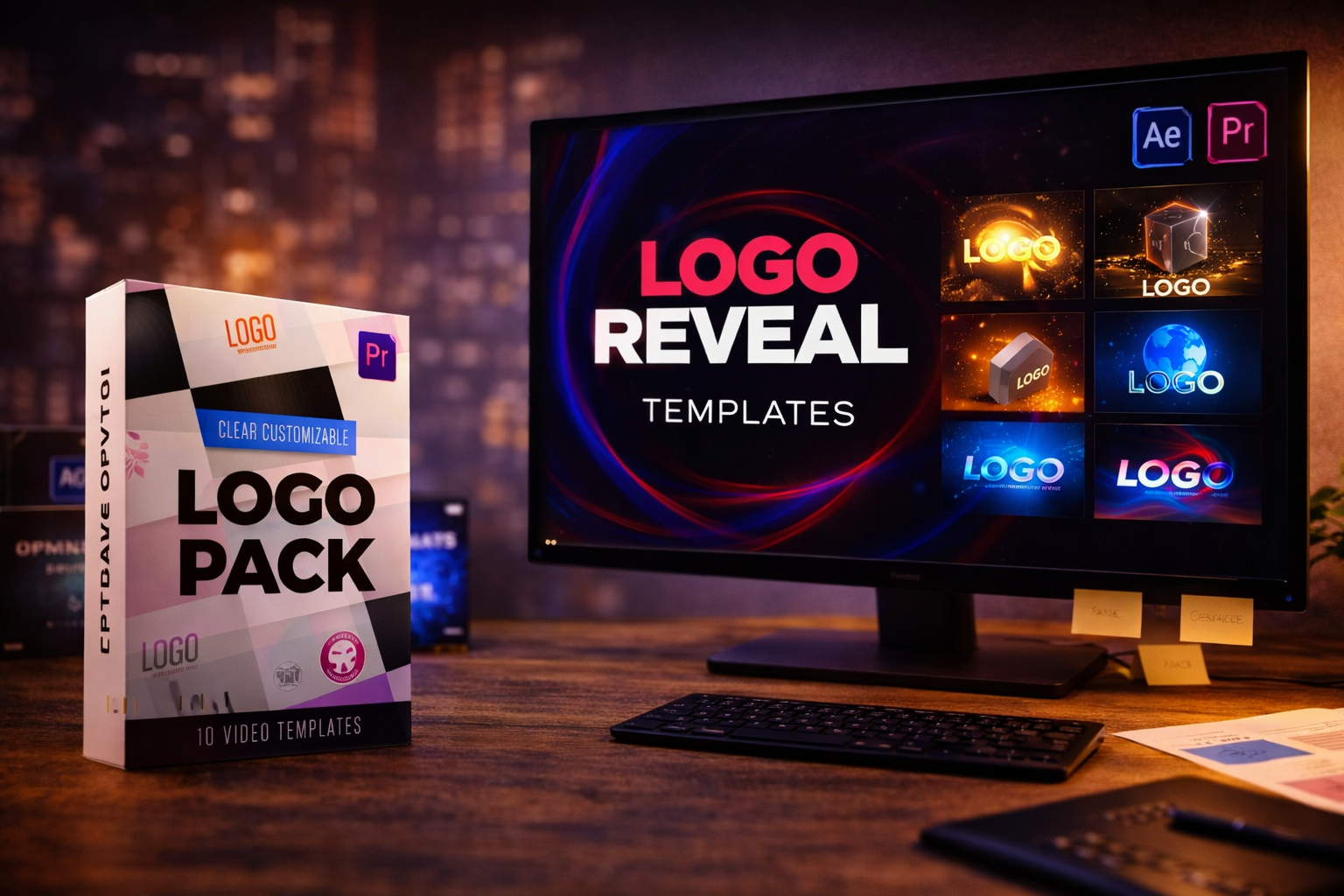
Five logo reveal styles align to distinct brand personalities, each communicating a different perception to the viewer within the first 2-3 seconds. Most template marketplaces organize reveals by visual aesthetic (“glitch,” “elegant,” “particle”) without explaining which style fits which brand.
Clean minimal logo reveals use soft easing, white space, and restrained motion to communicate trust and professionalism. The logo fades or scales into center frame with a subtle shadow or light shift, then holds static for 1-1.5 seconds. This style aligns with professional services, law firms, consulting, finance, and healthcare. Look for a simple composition with no particle or 3D dependency, editable background color, and a labeled logo placeholder.
Glitch and digital logo reveals use pixelation, static noise, and data-corruption aesthetics to communicate energy and disruption. The sequence runs rapid glitch frames (0.3-0.5 seconds) with RGB split or scan-line distortion, resolving into a clean logo hold. This style aligns with gaming channels, tech startups, digital-native brands, and SaaS products. Look for customizable glitch intensity using native AE distortion effects (no plugin dependency) and an editable color scheme.
3D textured logo reveals use realistic materials like brushed metal, concrete, or wood grain to communicate physical durability and scale. The logo rotates or assembles from 3D elements over 2-3 seconds while the camera orbits to reveal the full mark. This style aligns with construction firms, manufacturers, trades, and equipment suppliers. Look for pre-rendered 3D elements (avoiding Element 3D plugin dependency), texture swap options, and 4K resolution.
Kinetic typography logo reveals lead with animated wordmarks or taglines before the logo mark appears, prioritizing message delivery over visual spectacle. Text animates in (stomp, slide, or elastic bounce) at 0-1 seconds, the logo mark follows at 1-2 seconds, and both hold static. This style aligns with creative agencies, content creators, educators, and personal brands. Look for editable text compositions, flexible timing markers, and a tagline placeholder. For templates designed around this use case, see video intro templates built for brand identity.
Cinematic and particle logo reveals use light leaks, lens flares, particle assembly, or atmospheric builds to communicate premium positioning. The sequence builds over 2-4 seconds and resolves into the logo with dramatic lighting, followed by a 1-1.5 second hold. This style aligns with entertainment companies, luxury brands, film studios, and event brands. Look for adjustable particle density, background controls, and either no Trapcode dependency or a pre-rendered fallback included.
Logo reveal template quality depends on duration control, logo hold time, plugin independence, and placeholder clarity, not visual complexity. Check any logo reveal template against these nine criteria:
If a template lacks a clear placeholder, color controller, and plugin independence (items 3, 4, and 6), customization takes longer than building a basic reveal from scratch. For a broader framework, see the full After Effects templates guide.
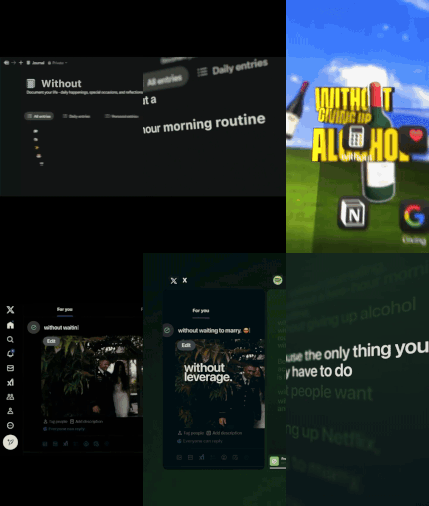
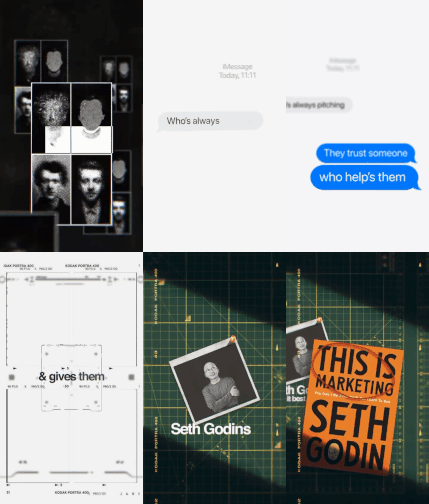
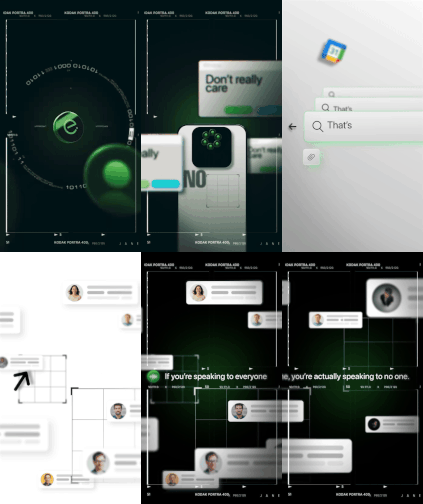
51 viral edit and SaaS UI animation project files with organized layers, editable effects, and branded intro structures. Built by editors.
Browse Projects
Customizing a logo reveal in After Effects follows five steps: swap the logo, adjust colors, edit the tagline, modify timing, and export.
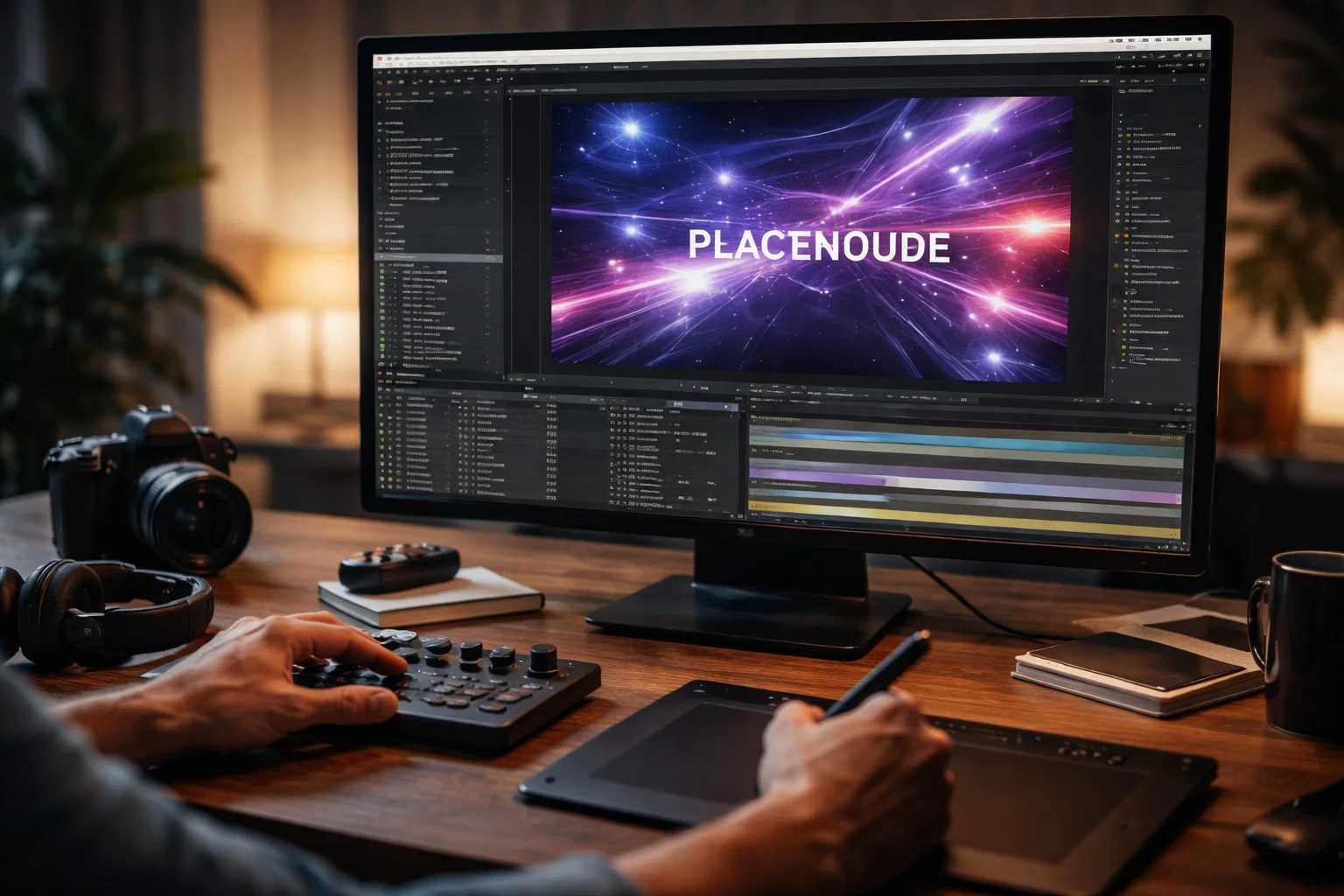
Open the .AEP and navigate to the Logo Comp. Drag your logo onto the placeholder layer (vector formats scale cleanly; raster logos need at least 2000px width for 4K). Adjust theme colors through the color controller. Edit the tagline text layer if included. Shorten timing to under 2 seconds for Reels or extend to 4-5 seconds for YouTube. Export at the target ratio: 16:9 for YouTube, 9:16 for Reels/Shorts/TikTok, 1:1 for feed posts.
This process takes 10-15 minutes with a structured template versus 3-5 hours from scratch.
A single logo reveal template can deploy across five contexts, but each requires a different duration and aspect ratio.
YouTube intros run 3-5 seconds at 16:9. The reveal opens the video and sets the production standard. Consistency across uploads builds channel recognition.
Reels, Shorts, and TikTok demand under 2 seconds at 9:16 (1080×1920). The reveal must function as a retention trigger, not a branding buffer. For templates designed around short-form retention, see intro templates built for viral Reels.
Presentations and pitch decks use 3-5 seconds at 16:9, embedded as a video file on the title slide.
Website headers need a 2-3 second loop. Lightweight formats (WebM or GIF) outperform full MP4 renders on page load speed.
Client deliverables must match brand guidelines for duration, ratio, and format. Include the source .AEP alongside the rendered file so clients can adjust later.
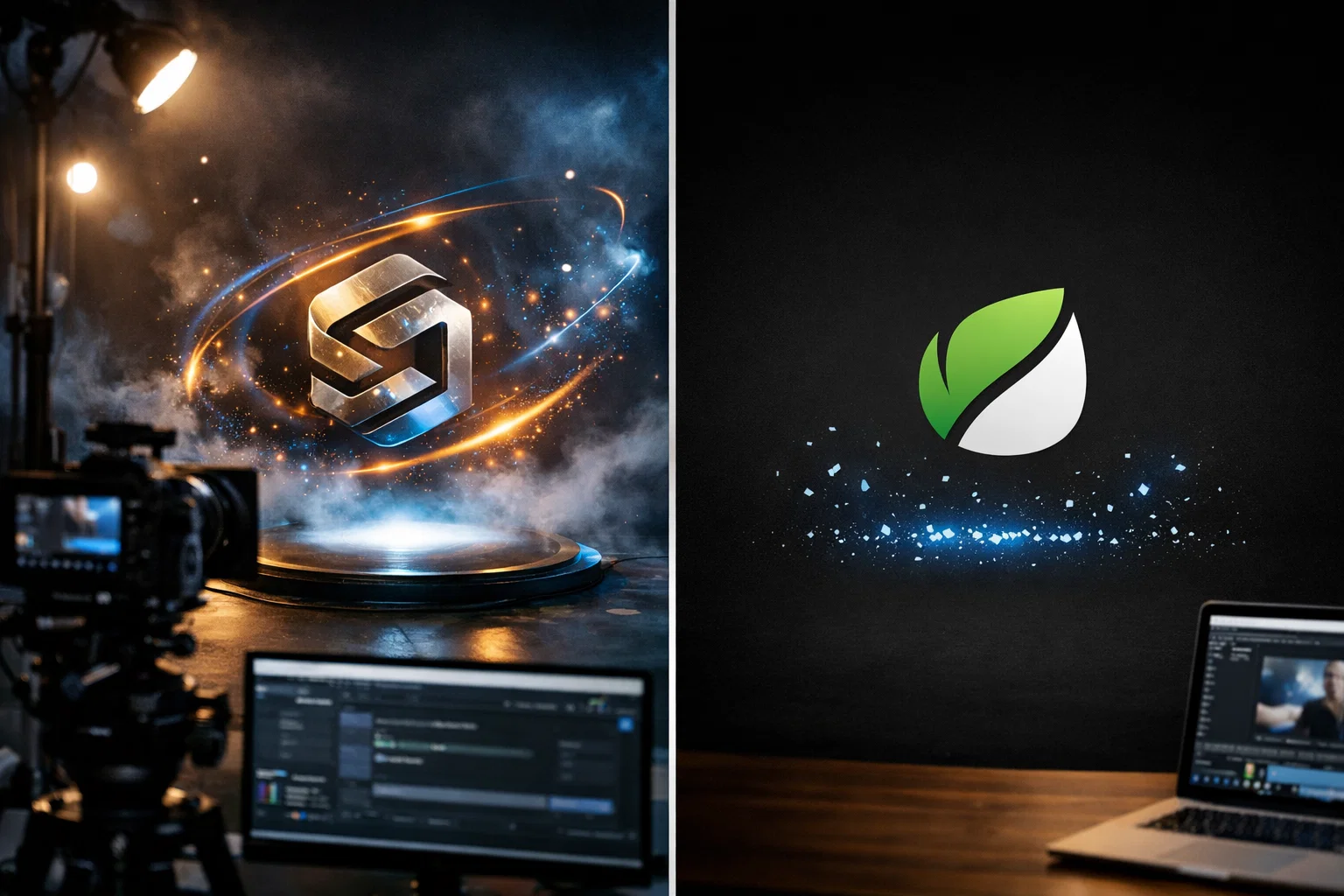
Free logo reveal templates cover basic animation styles but typically lack color controllers, tagline layers, and multi-format aspect ratio options.
Free templates usually include a single animation style (fade, slide, or basic scale), a fixed background color, a basic logo placeholder, and a single 16:9 aspect ratio. Some carry plugin dependencies without fallbacks.
Premium templates add a centralized color controller, a tagline text layer, multiple aspect ratio compositions (16:9, 9:16, 1:1), 4K resolution, an organized project hierarchy, and plugin-free or pre-rendered designs.
For one-off personal projects, free templates work. For client deliverables and cross-platform deployment, the format flexibility of premium templates saves more production time than the price costs.
Four logo reveal patterns consistently underperform regardless of animation quality.
Reveals longer than 5 seconds: On YouTube, viewers skip. On Reels, the algorithm penalizes low completion rates. A logo reveal is an opener, not the content. Keep it under 3 seconds for social and under 5 for long-form.
No static logo hold: If the animation transitions away before the logo sits legible for at least 1 second, the viewer never registers the brand mark. The hold is where recognition happens.
Plugin-heavy particle and 3D effects: Templates requiring Trapcode Particular, Element 3D, or Saber create troubleshooting friction on every new machine. Without pre-rendered fallbacks, the reveal becomes a liability.
Landscape-only formatting: A 16:9 reveal cropped to 9:16 loses compositional balance and cuts off elements. Native vertical reveals are required for Reels, Shorts, and TikTok.
Every EarnEdits project file includes organized layers, editable effects, and brand-ready intro structures. Fully open .AEP format.
Shop All Projects
Under 3 seconds for Reels, Shorts, and TikTok. Under 5 seconds for YouTube intros and presentations. The final logo must hold static and legible for at least 1-1.5 seconds after the animation completes.
Some depend on Element 3D, Trapcode Particular, or Saber. Always check requirements before downloading. The best templates either avoid plugin dependency or include pre-rendered fallback compositions.
Only if the template includes multiple aspect ratio compositions (16:9, 9:16, 1:1). A reveal built at 16:9 only will not reframe cleanly to 9:16 without losing compositional balance.
A logo reveal introduces the logo from a hidden state to full visibility. Logo animation is the broader category that includes reveals, logo stings, animated website logos, and looping motion.
Most paid marketplace templates include commercial use rights. Free templates sometimes restrict commercial use. Always verify license terms before delivering a templated reveal to a client.

Explore more guides on After Effects project files and viral editing workflows.
Production-ready edits that teach you how they were built.